Males vs Females
Frequently asked question: Which are better as pets, males or females? The answer is both.....it depends on which one better fits your lifestyle! Here is some information to help you weigh the pros and cons of both sides! (These facts are based on MY OWN lines and may very upon other breeders/rats)
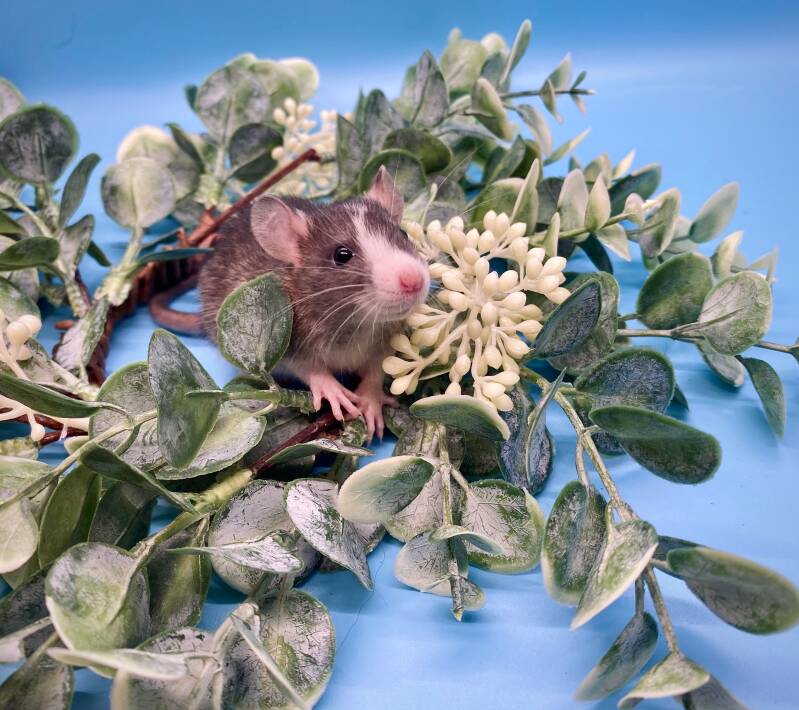
Males
- Boys tend to be more calm and lazy
- Boys are more snuggly and affectionate. They tend to be very licky!
- In many cases, I recommend boys for kids as they are more chill and relaxed
- Boys generally are much bigger than females, they can reach up to 2 pounds.
- Boys are lazy, which means they may not be as trainable as females. (Potty training may be more difficult, if you plan to litter train)
- Boys have been known to be less prone to tumors. (This is very true with my lines. I have only had one boy get a tumor back in 2022)
- Boys produce "buck grease". This is a natural yellow/orange oil produced by the sebaceous glands. It is a byproduct of high testosterone levels and us used as a scent marker. This usually starts to appear on males after 6 months. It is completely normal. Rubbing them down in coconut oil or olive oil can help loosen some the oils. (Yes, oil on oil!) (Neutering has also been known to help these secretions)
- Boys have been KNOWN to be more stinky. I am on the fence about this. They can pee and mark more than females for sure. Good hygiene and cleanliness can certainly help in this area.
- Boys can sometimes live shorter lives IN COMPARISON to females.
Females
- Girls have energy! They are typically very active and hyper. Always down for an adventure!(Especially when babies)
- Girls can be more "attentive" and easier to train!
- Females are smaller in size, as compared to males.
- Females go into heat every 4-6 days. They reach sexual maturity between 5-6 weeks, and remain fertile until 15-18 months old. When they come into heat, they can be more touchy, jumpy, increased activity, and can vibrate, wiggle their ears, and pose/arch. At this time, they can get a little frisky with their cage mates also.
- Females have been known to live slightly longer than males.